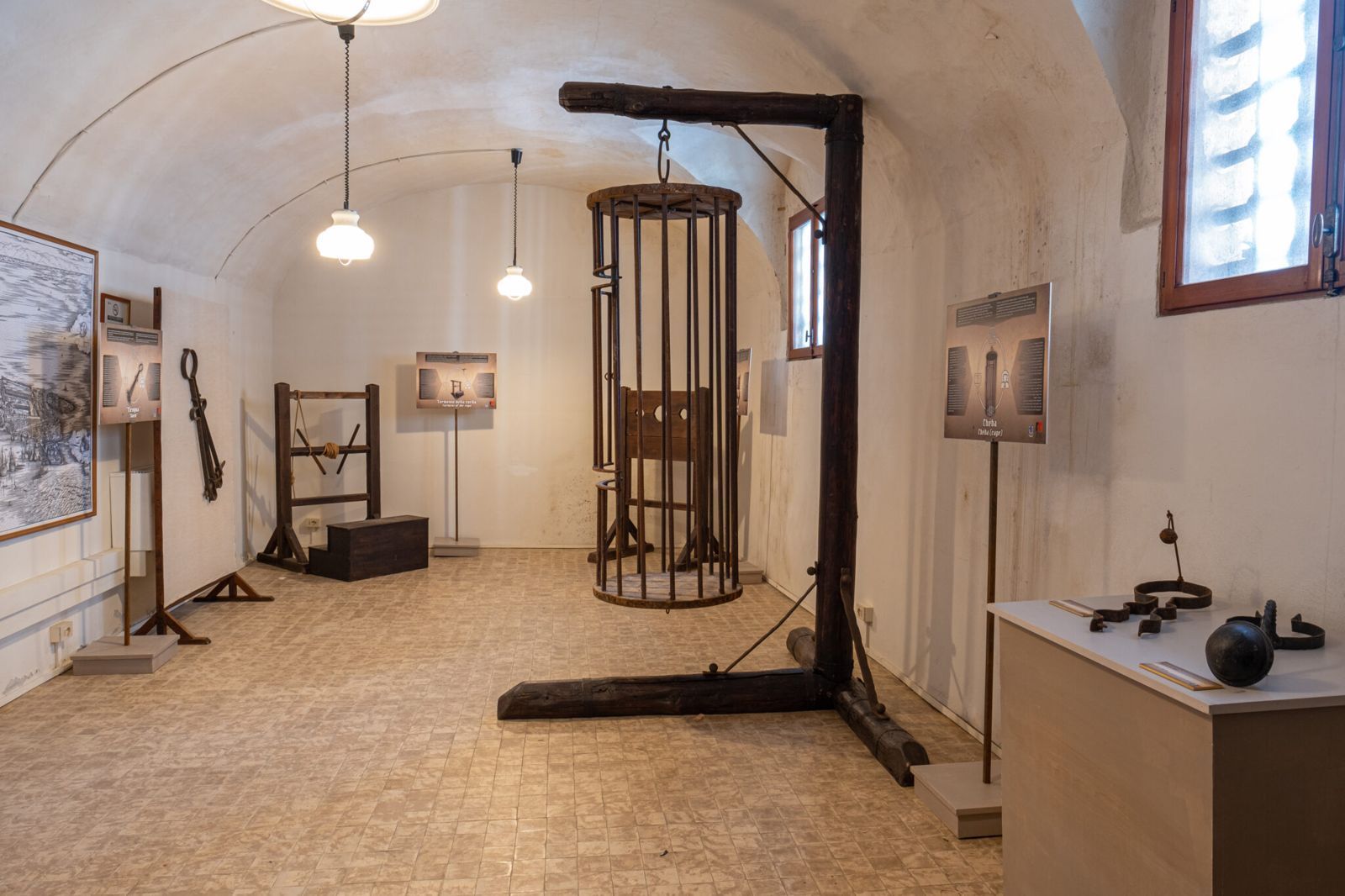
What is the Chèba?
The Chèba was a peculiar instrument of torture used in the Republic of Venice. It was a wooden or iron cage suspended at a certain height above the ground, in which the condemned was locked up. It could be hooked to a chain hanging from a pole jutting out from the wall of a building, or placed directly against its masonry.
During the period of the sentence, which varied according to the crime committed, the prisoner could feed himself using a thin cord with which he managed to pull up bread and water to drink.
Where does the word Chèba come from?
The term comes from the Venetian dialect and in Italian means gabbia, that is, cage.
It was devised mainly to punish clergymen guilty of sodomy, murder, forgery and blasphemy, and remained in use until the end of the 15th century.
It is said that this sentence was inflicted on 24 December 1391 on Jacopo Tanto, parish priest of the church of San Maurizio, who had killed another priest. On that occasion the sentence was for life.
A chèba (once) on the bell tower of St. Mark
For a couple of centuries St. Mark’s bell tower housed a chèba, probably made of wood reinforced with iron, and hung with chains or a rope from a beam that protruded from a hole halfway up the brick shaft of the bell tower, above the bakers’ shops.
The cage was removed in the 16th century after receiving its last occupant, the priest Francesco di San Polo, who had blasphemed because of his bad luck at gambling.
The prisons of the Prison Palace in Venice
The Prison Palace still offers the opportunity to see the instruments of torture, the cells and period costumes, and to discover stories and legends of a distant Venice. A piece of history that bears witness to the machines of death and torture once used as instruments of justice.