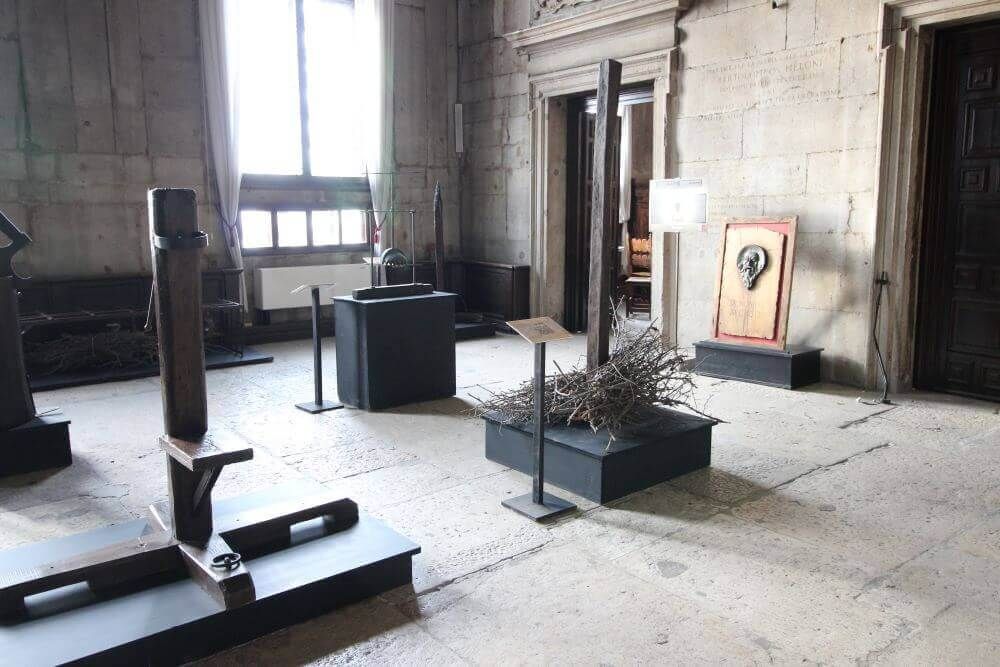
In the Middle Ages, torture was a common means of extracting confessions, punishing criminals and intimidating the population. Medieval tortures were often brutal and could cause irreparable physical and mental harm. Venice in particular was known for its severity towards criminals and enemies of the state. The city had a wide range of instruments of torture and prisons to punish the guilty and intimidate the population.
What were the worst medieval tortures?
Here are some of the medieval tortures most commonly used in Venice:
- Flogging
- The fetters
- The pillory
- The Chèba
- The berlina sentence
- The rope
- The Venetian Carégon
1. Flogging
One of the most common instruments of torture
Flogging was one of the most common instruments of torture. It involved using a scourge, a rope or a whip to strike the back of the condemned. Flogging could cause lacerations, wounds and even death.
2. The fetters
Iron bars tightened around the ankles or knees
The fetters were another common form of torture. They consisted of a pair of iron bars tightened around the ankles or knees of the condemned, preventing them from moving. The fetters could cause pain, swelling and infections.
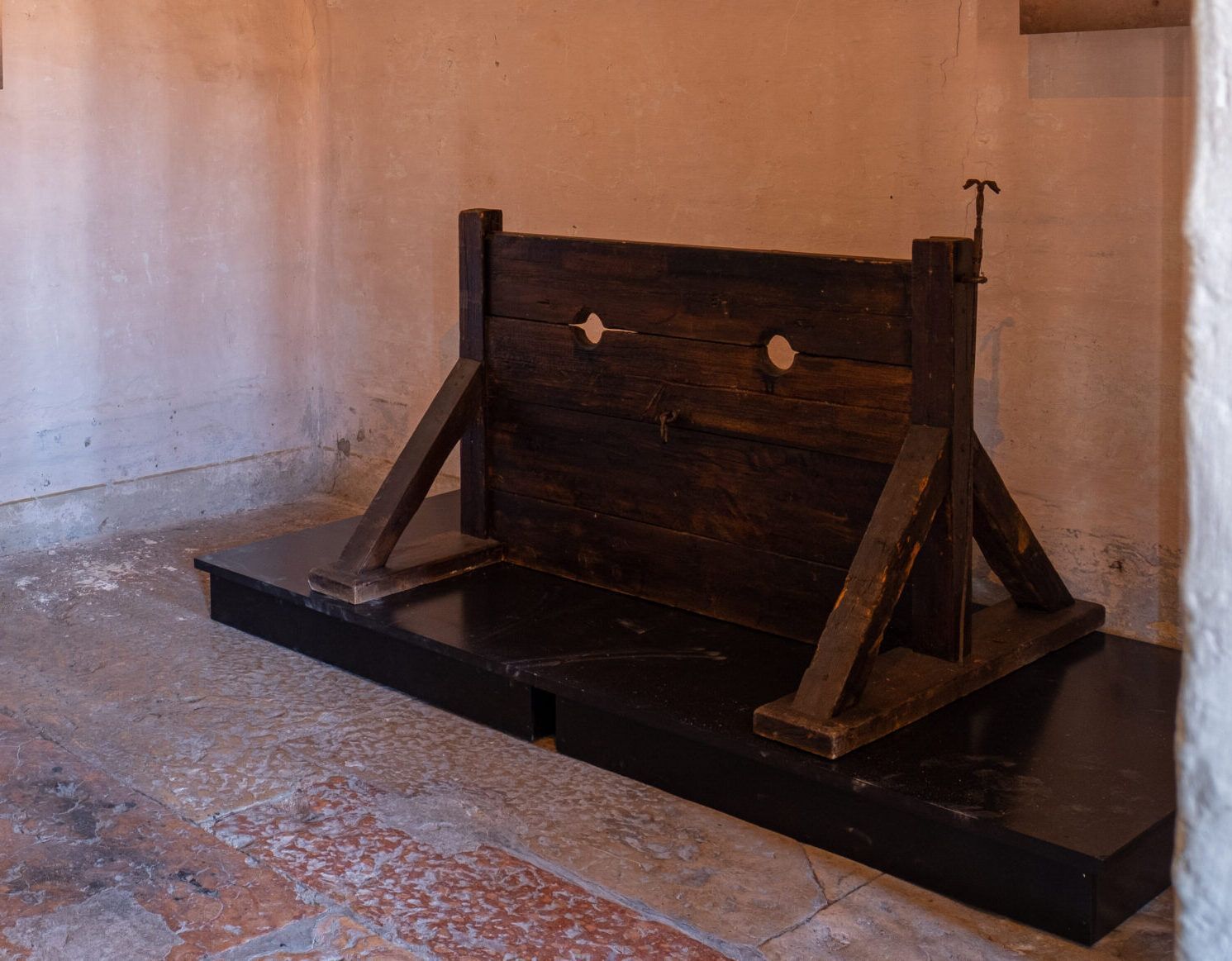
3. The pillory
A form of public humiliation
The medieval pillory was a form of public humiliation and punishment used during the Middle Ages. It consisted of a post or similar structure to which a person convicted of a crime was tied. The person was exposed to the public in a visible place, often a public square, where they were humiliated and beaten. The pillory could be used to punish a variety of offences, such as theft, fraud, prostitution and other minor crimes. It was considered a deterrent against future crimes, as the city’s inhabitants could see the punishment inflicted.
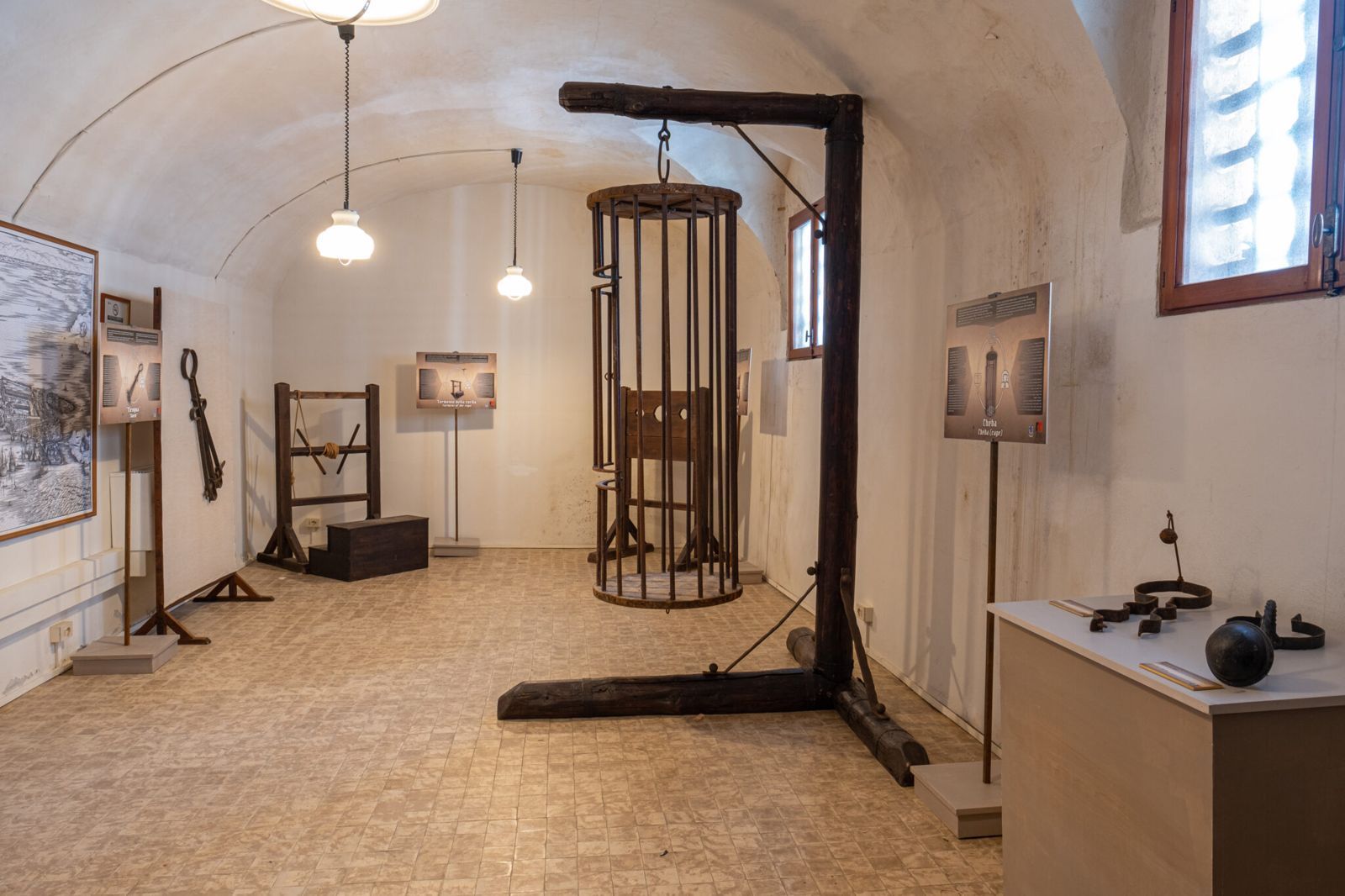
4. The chéba
The suspended wooden or iron cage
The chéba was a form of torture used to extract confessions. It consisted of a wooden or iron cage in which the condemned was locked up and then tortured with heat or cold. The chéba could cause pain, dehydration and even death.
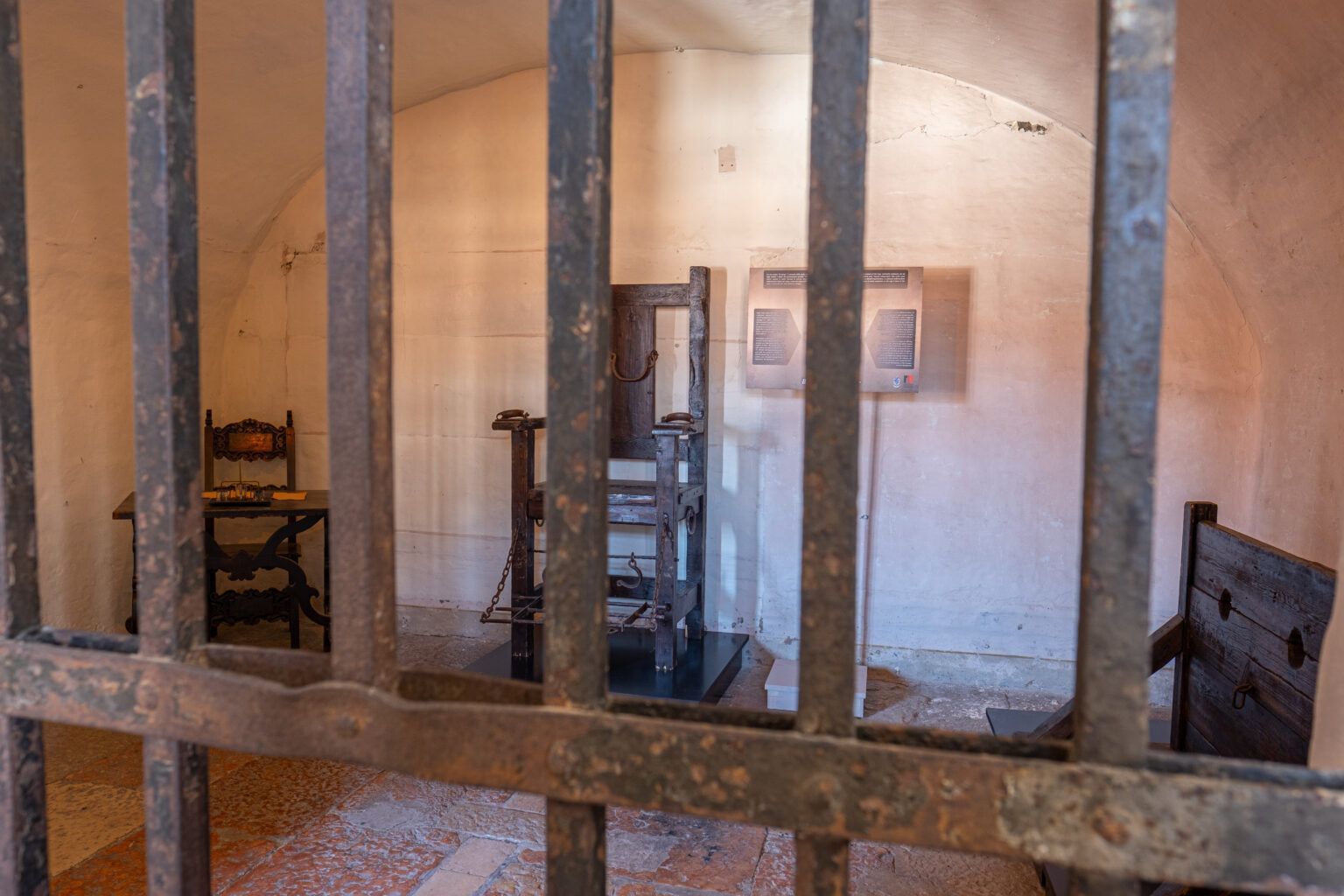
5. The berlina sentence
Chained and exposed to the public
The berlina sentence consisted of chaining the prisoner to a wooden chair with armrests and straps and exposing them to the public so that everyone could see them. The berlina sentence could cause shame and social isolation.
6. The rope
The torment of the rope
The rope was an instrument of torture commonly used during the Middle Ages. There were various forms of torture by rope, including:
- The squassatio: a rope was tied around the victim’s body, who was lifted off the ground and then suddenly dropped, causing fractures and injuries.
- The strappamento: a rope was tied around the victim’s limbs and pulled in opposite directions to tear the joints apart.
- The “strapazzo” torture: a rope was tied around the victim’s chest and pulled hard to cause pain and internal injuries.
These tortures of the Middle Ages were extremely painful and often led to death or permanent injury. They were used to extort confessions and information during interrogations, but also as a form of punishment for crimes committed.
7. The Venetian carégon
The fire torture
The Venetian carégon , also known as the “fire torture”, consisted of placing the accused on a wooden seat fitted with an iron grate on which to rest the feet. The bare soles of the culprit’s feet were brought close to the burning coals beneath the grate. At first, a wooden board was placed between the feet and the fire to prevent overly severe burns, but if the accused refused to confess, it was removed. This practice was extremely painful and often caused severe, permanent burns.
Visit the Prison Palace in Venice
The Prison Palace in Venice is a historic site that offers the chance to discover the prisons and instruments of torture used during the Middle Ages. The palace housed the city’s prisons, and inside there are several rooms that tell the story of the prisons and of Venetian justice. You can also see some of the most terrifying medieval tortures used to extort confessions and information during interrogations and to punish prisoners.