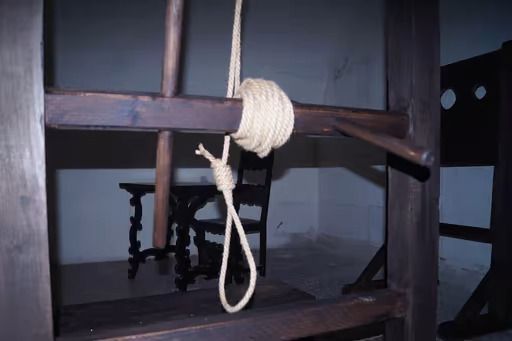
How the torment of the rope worked
It was used to obtain a confession and consisted in tying the offender’s wrists behind his back with a long rope and then hoisting the body up by means of a pulley. The whole weight of the body thus bore down on the shoulder joints.
To make the effects worse, the rope was let go, dropping the suspect, and before he hit the ground it was suddenly stopped, tearing the muscles and dislocating – usually irreversibly – the arms at the shoulder joints.
Who could not be subjected to it
The treatment could not be applied to children under 14, to pregnant women until 40 days after giving birth, to lawyers, clergymen, doctors and dignitaries in general, nor to anyone over 60 years of age. Moreover, torture was not allowed on days devoted to worship, nor before ten hours had passed since the defendant’s last meal.
Testimonies and rules of the torture
Some testimonies show that certain people subjected to the torment of the rope felt almost no pain, because they were “trained” and knew how to move to avoid dislocation, or to dislocate their shoulders with the least possible suffering.
Lawyers could not be present during the torture, and a scribe had to record everything the offender said: moans, screams, howls, whether he answered, whether he remained silent or begged to be released by declaring himself guilty (while remaining tied to the rope until he had finished confessing).
The statement made in tormentis was ratified the following day, when the offender was brought before the judge.