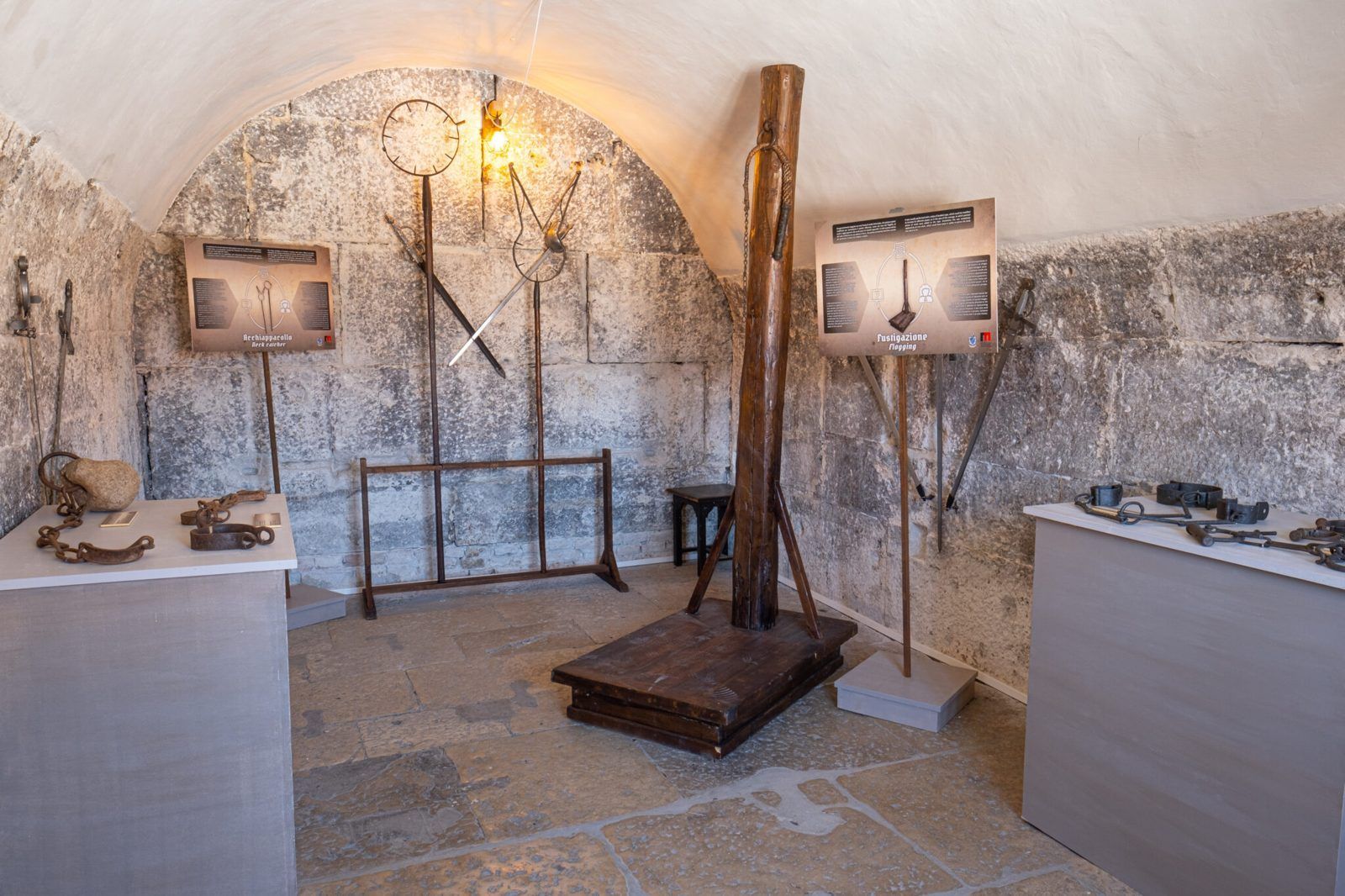
Stocks are a punitive device used during the Middle Ages. Unlike the pillory, where the restraining boards are fixed to a post and placed around the arms and neck of the condemned, forcing him to stand, stocks consist of a structure made specifically to restrain the feet by locking the ankles.
In prisons they were used to immobilise the inmate so that the soles of his feet could be whipped more easily.
Torture in the Middle Ages
Widely used in the Middle Ages, this treatment was known in much earlier times. In fact, it is already mentioned in the Bible, where it is reserved for Paul and Silas, disciples of Jesus: “Who, having received such a charge, thrust them into the inner prison, and made their feet fast in the stocks” (Acts of the Apostles 5:24).
In 1989 the town of Dermott, in Arkansas (US), passed a curfew law punishable by up to thirty days in jail for the offender and up to two days in the stocks for his parents. The initiative was abandoned, however, because the town had no stocks and had not even allocated the funds needed to build them.
Curiosities about the stocks
In 2020, during the COVID-19 pandemic, the police of Chinú, in Colombia, put residents who had broken the mandatory quarantine in the stocks for a few hours.
The Prison Palace in Venice: the jail and the punishments of the condemned
The Prison Palace still offers the opportunity to see the instruments of torture, the cells and period costumes, and to discover stories and legends of a distant Venice. A piece of history that bears witness to the machines of death and torture once used as instruments of justice.